Timing
The best time to visit Kenya
There is no bad month for a Kenya safari — only months that suit different priorities. Here is what each one actually gives you, and what it costs.
Kenya sits on the equator, so the seasons are defined by rain rather than by temperature. There are two wet periods — the long rains from roughly late March into May, and the short rains from around late October into December — and two dry ones between them.
Those are averages across decades. In any given year the rains arrive early or late, or barely arrive at all. Nobody, including us, can tell you what April 2027 will do. What we can tell you is what each month usually offers and what it usually costs, which is enough to make a good decision.
The four seasons that matter
July to October — peak, and the migration
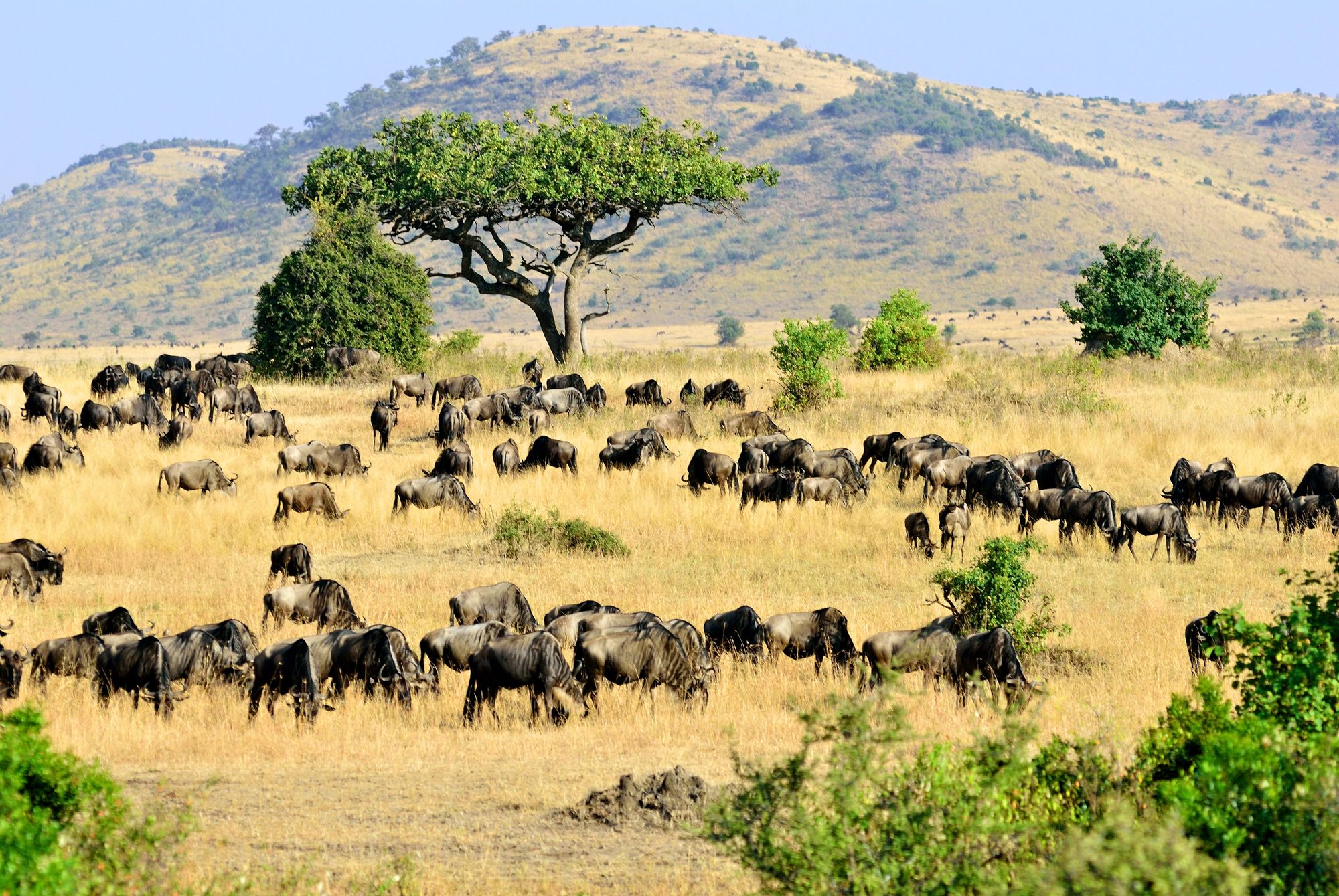
Cool, dry and the busiest time of year. The wildebeest herds are generally in the Masai Mara, grass is short, water is scarce so animals concentrate, and the chance of a Mara river crossing is at its highest. It is also when prices peak, the reserve is at its most crowded and the best camps sell out six to twelve months ahead.
If the migration is the reason you are going, this is your window and you should book early. If it is not, you are paying peak prices for crowds you did not need.
January and February — the quiet dry season
The other dry season, and in our view the most underrated time to be in Kenya. Hot, dry, often still green from the short rains, with excellent predator viewing and a fraction of the peak-season traffic. Amboseli is dusty and Kilimanjaro is often clear. Prices sit below the July–October peak.
March to May — the long rains, the green season
The cheapest time to go by a wide margin, and the most misunderstood. It rains, usually in heavy afternoon bursts rather than all day. The country is spectacular — deep green, full rivers, newborn animals, enormous skies. Birding is at its best as the migrants are in.
The honest downsides: some camps close for part of this period, black-cotton soil roads in parts of the Mara and Amboseli can become genuinely difficult, and photography is a gamble. If you are flexible and travelling on a budget, the value here is extraordinary. If this is a once-in-a-lifetime trip with fixed dates, choose a different window.
November and December — the short rains
Short, sharp afternoon storms rather than sustained rain, and rarely disruptive to a game drive. Skies are dramatic, the parks are quiet, prices are low and the migrant birds have arrived. The last ten days of December are the exception: Christmas and New Year carry peak rates and camps fill early.
Month by month
| Month | Weather | What it means for your trip | Price |
|---|---|---|---|
| January | Dry, hot, green underfoot | Excellent cats, few vehicles, good value. One of the most underrated months in Kenya. | High-ish |
| February | Dry and hot, the driest month in much of the country | Concentrated game around water, superb photography light, dusty in Amboseli. | High-ish |
| March | Building to the long rains | Quiet and cheap in the first half. Late March the rains usually arrive. | Low |
| April | Long rains, the wettest month | Green, dramatic and very cheap. Some camps close. Roads in some parks get difficult. | Lowest |
| May | Long rains tailing off | Still wet, still cheap, and emptying of visitors. Birding is superb. | Lowest |
| June | Drying out, cooler | Landscape at its greenest with the rain gone. Prices climb towards the end of the month. | Mid |
| July | Dry and cool; migration usually arriving | The herds typically reach the Mara. Prices step up sharply. Book well ahead. | Peak |
| August | Dry and cool; peak migration | Best chance of river crossings, and the busiest the Mara gets all year. | Peak |
| September | Dry; migration still in the Mara | Arguably the best month — migration present, slightly fewer people than August. | Peak |
| October | Dry, warming; herds start to move south | Still excellent, quieter through the month, prices easing at the end. | High |
| November | Short rains, usually brief afternoon storms | Dramatic skies, very good value, migrant birds arriving. Rarely disruptive. | Low |
| December | Short rains easing; hot | Quiet and good value until about the 20th, then Christmas rates and full camps. | Low then Peak |
Weather patterns are long-run averages, not forecasts — the rains shift by weeks from year to year. "Price" describes how camp rates typically move through the year, not a specific figure.
What about the coast?
The Kenyan coast runs on a related but not identical calendar. It is hot and humid year-round. The long rains in April and May are the one period we would steer you away from, when many coastal hotels close or run skeleton service. December to March is hot, clear and busy; July to October is slightly cooler, drier and excellent.
Usefully, that means the safari peak and the coast’s good weather overlap, so a bush-and-beach trip in August or September works on both halves. Read more in our ten-day safari and beach itinerary.
So which month should you choose?
- You want the migration: late July to early October, booked early.
- You want the best value: March, April, May or November.
- You want good wildlife without the crowds: January, February or November.
- You are tied to school holidays: August is peak but excellent; Easter falls in the long rains, so favour Laikipia and the conservancies over the low-lying parks.
- You want to combine safari and beach: July to October, or January to March.
Timing questions
Is it worth going to Kenya during the long rains?
If you are flexible and value-conscious, yes — the country is beautiful, the parks are empty and prices are at their lowest of the year. If your dates are fixed and this is a once-in-a-lifetime trip, we would steer you to a drier window, and we will say so when you ask.
When exactly is the great migration in the Masai Mara?
Typically from around July to October, with river crossings most likely between late July and September. The herds follow rainfall, so the timing shifts by weeks each year and no operator can give you a date.
Our great migration guide covers the movement month by month.
Which month is hottest?
January to March in the low-lying parks — Amboseli, Tsavo, Samburu and the coast. The highlands, Laikipia and the Mara stay comfortable year-round, and can be genuinely cold on an early morning game drive in July and August. Bring a fleece; everyone is surprised by this.
More from our Kenya guides
Specialist guides across our Kenya network
Each of these is a focused guide we publish. Same Kenya specialist behind every enquiry.
Not sure your dates are the right ones?
Send them over. If a different week would give you a materially better trip for the same money, we will tell you — and if your dates are already good, we will tell you that too.