Narok County, south-west Kenya
Masai Mara
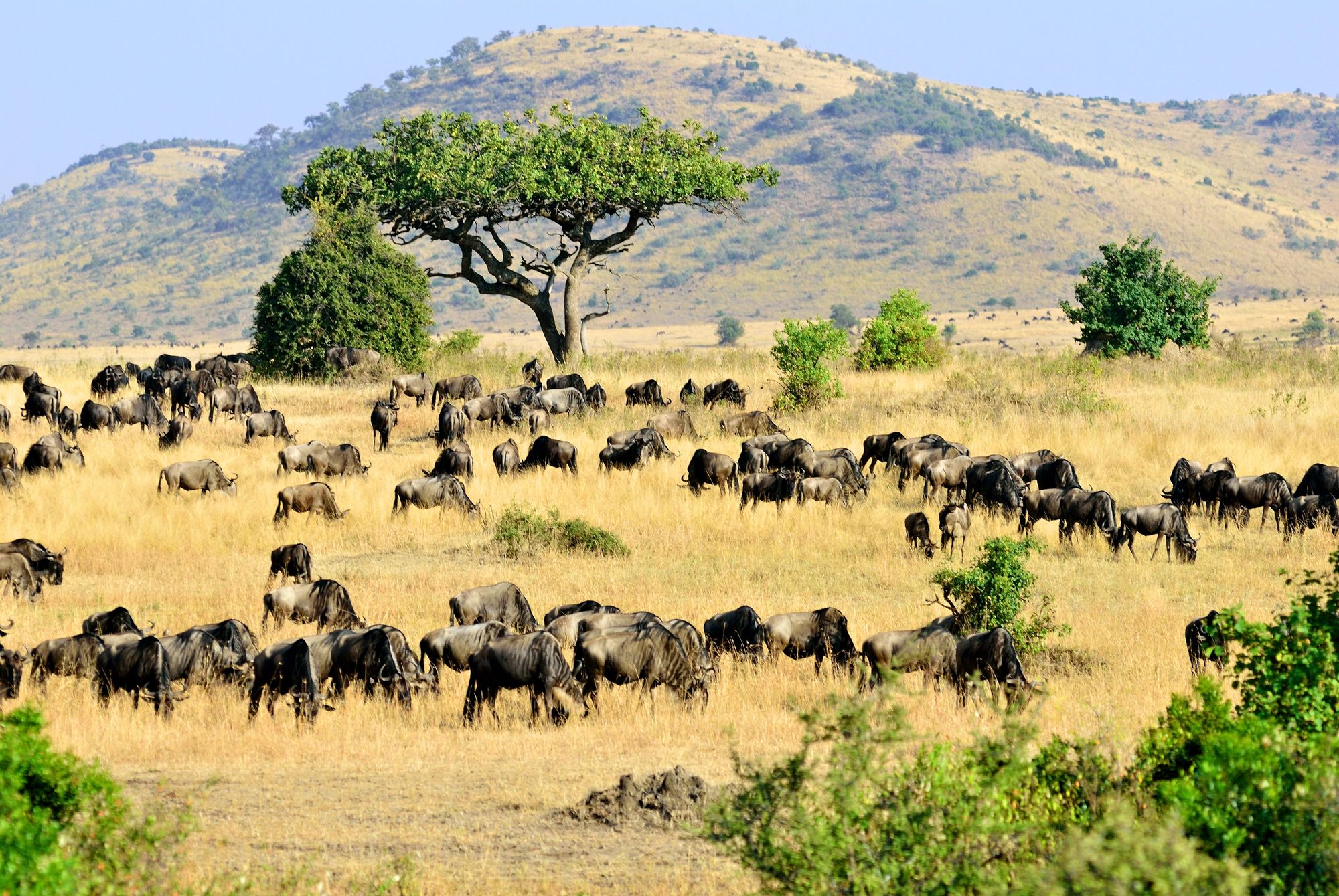
Open grassland, resident big cats all year, and from roughly July to October the arrival of the wildebeest herds from the Serengeti.
- Best for
- Big cats, migration, first safaris
- Peak season
- July – October
- Suggested stay
- 3 – 4 nights
- From Nairobi
- 45-min flight or 5–6 hours by road
Why go
The Mara is the park most people picture when they picture a safari, and for once the reputation is earned. It is open, rolling grassland cut by the Mara and Talek rivers, which means you see a long way and animals have nowhere to hide. Lion density is high and prides are used to vehicles, so sightings are close and unhurried. Cheetah use the short grass. Leopard live along the riverine forest.
What it is not is a secret. Between July and October the reserve is busy, and a famous crossing point can gather a hundred vehicles. That is not a reason to avoid the Mara. It is a reason to be deliberate about where inside it you stay.
Reserve or conservancy — the decision that shapes your Mara
The Masai Mara National Reserve is the government-managed core. Anyone with a park ticket can drive it, vehicle numbers are not capped, and you must stay on the tracks. Camps inside the reserve put you in the middle of the action, including the river crossings.
Ringing the reserve to the north and east are private conservancies — Mara North, Olare Motorogi, Naboisho, Ol Kinyei and others — leased from Maasai landowning families. Each caps the number of beds, and therefore vehicles, per acre. Inside them you can drive off-road to a sighting, go out at night, and walk with an armed guide. None of that is permitted in the reserve.
The honest trade-off: conservancies cost more per night and sit slightly away from the main crossing points on the Mara River. The reserve is cheaper, is where the crossings happen, and is busier. Many of the best Mara trips split the difference — two nights in a conservancy for the quiet and the night drives, two in or beside the reserve during crossing season.
If you only remember one thing about the Mara
Your experience depends far more on which part of the Mara you sleep in than on which month you go. Tell us how you feel about other vehicles and we will point you at the right side of that line.
When the migration is actually in the Mara
The wildebeest herds generally cross from Tanzania’s Serengeti into the Mara from around July, stay through August and September, and drift back south from late October. Those are patterns, not a timetable — the herds follow rain, and rain does not read calendars.
River crossings are the spectacle everyone comes for and the part nobody can promise. Herds mass on a bank for hours and then do nothing. Give yourself at least three nights in crossing season and treat a crossing as a bonus rather than the purpose of the trip.
The rest of the year the Mara is still excellent. Resident wildebeest, zebra, topi and buffalo do not leave, and the predators that eat them do not either. January to March is green, quiet, far cheaper and very good for cats with cubs.
How many nights, and what to pair it with
Three nights is the working minimum — one is lost to arrival, one to departure. Four is better in migration season. Fewer than three and you are paying Mara prices for Mara traffic without the time to get away from it.
The Mara pairs naturally with a contrasting landscape rather than more grassland. Amboseli for elephants under Kilimanjaro, Samburu for the dry northern species, Laikipia for walking and riding, or the coast for a week of doing nothing afterwards.
What you will see
- Lion — high density, several well-known prides, visible year-round
- Cheetah — favour the short-grass plains; conservancies give better off-road access
- Leopard — riverine forest along the Mara and Talek
- Elephant, buffalo, giraffe, topi, eland and very large plains-game herds
- Black rhino — present but genuinely scarce; do not plan around seeing one
- Wildebeest and zebra in the hundreds of thousands during the migration months
Where to stay
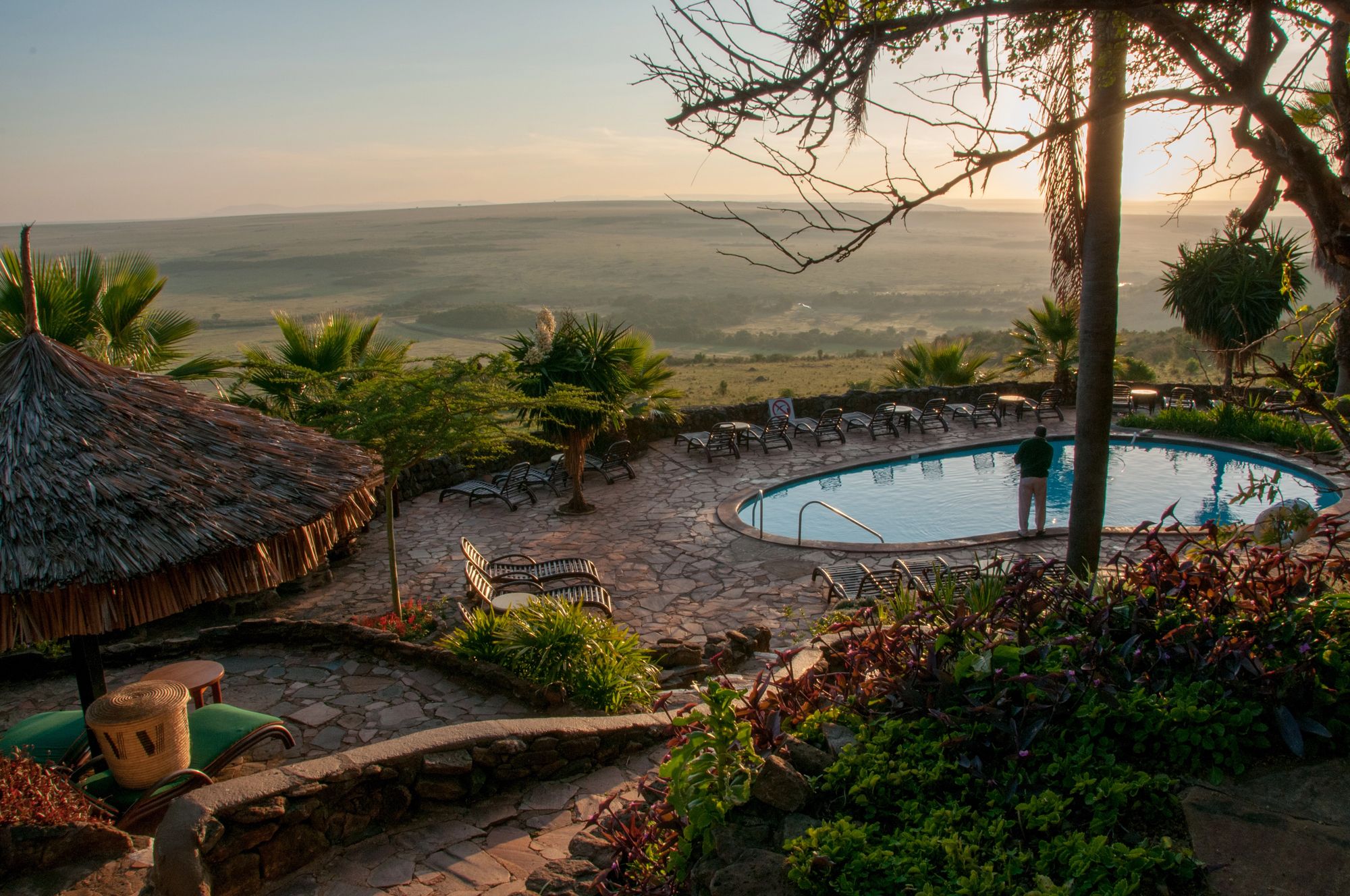
- In the reserve: classic tented camps along the Mara and Talek rivers, closest to the crossings and the busiest game-viewing circuits.
- In the conservancies: smaller camps with capped vehicle numbers, off-road driving, night drives and guided walks. Generally the better experience if you are not fixated on crossings.
- Just outside the boundary: the value option, with a longer drive to the gate each morning and reserve fees paid per entry.
We do not publish camp names as recommendations
Which camp is right depends on your dates, your budget and how you feel about other vehicles — and availability changes weekly. Tell us those three things and our Kenya specialist names specific camps in your quote, with the reasons.
Getting there
- Fly: roughly 45 minutes from Nairobi Wilson to one of about half a dozen Mara airstrips. Choose the airstrip by where you are staying, not by price.
- Drive: five to six hours from Nairobi via Narok, with the last stretch rough. It is a real day, but it shows you the Rift Valley escarpment and keeps your guide and vehicle with you throughout.
Questions
Masai Mara: common questions
Is the Masai Mara too crowded?
In the reserve, in August, at a river crossing — yes, it can be. Elsewhere and at other times of year, much less so. The conservancies exist precisely to solve this and cap vehicle numbers by design.
Tell us how much other traffic would spoil it for you. That single answer changes which camps we suggest more than anything else you tell us.
Will I definitely see a river crossing?
No, and anyone who promises one is selling. Crossings depend on herd position, rain and the herds’ own collective nerve. Three or more nights in the reserve in season gives you a fair chance.
Masai Mara or Serengeti?
They are the same ecosystem across a border. The Mara is more compact and has higher big-cat density in a smaller area; the Serengeti is far larger and takes longer to cover. If you have a week, Kenya lets you combine the Mara with a genuinely different second park more easily.
More from our Kenya guides
Specialist guides across our Kenya network
Each of these is a focused guide we publish. Same Kenya specialist behind every enquiry.
Put Masai Mara into a real itinerary
Send us your dates, who is travelling and roughly what you want to spend per person per night. Our Kenya specialist comes back within 24 hours with a plan built around them and a costed quote.